

COFE® Technology Platform
What is COFE®?
COFE® (Continuous Order Fulfillment Engine) is a real-time, closed loop, pull system designed to optimize warehouse operations. It resides between the Warehouse Management System (WMS) and work resources, functioning as a Warehouse Execution System (WES). COFE® prioritizes, sequences, and synchronizes work dynamically and in real-time, ensuring a seamless and efficient workflow.
Technology Stack and Foundational Components
System Architecture and Configuration: COFE® can be deployed in various configurations, including on-premises and off-premise setups. The system architecture includes multiple servers and nodes to handle different transaction rates and ensure high availability. For instance, a low transaction rate site might have fewer servers, while a high transaction rate site would require a more robust setup with additional servers to manage the increased load
- On-Premise Configuration: This setup involves deploying COFE® on physical servers within the warehouse. It includes server-class hardware with virtualization options, ensuring high performance and reliability.
- Off-Premise Configuration: COFE® can also be hosted in the cloud, leveraging providers like AWS and Azure. This setup offers flexibility in terms of cost structures, including capital, licensing, subscription, and transaction models
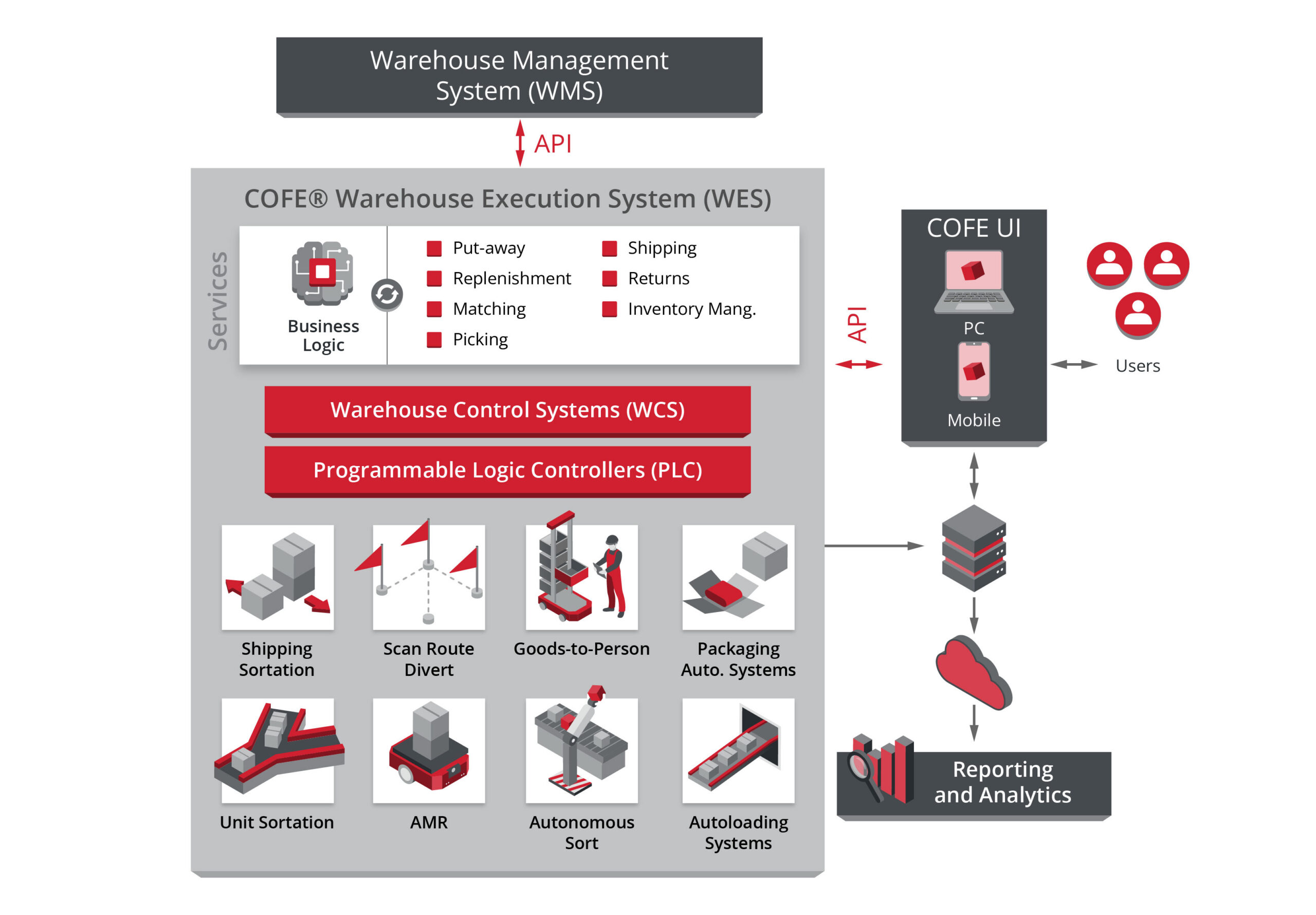
Dataflow Architecture: COFE®‘s dataflow architecture is designed to handle high volumes of transactions, with real-time message-based communication to PLCs and other systems. This ensures efficient and timely processing of orders and other warehouse tasks. The architecture supports seamless integration with existing warehouse systems, providing a unified platform for managing operations
Software Lifecycle and Versioning: COFE® follows a date-driven version release model, with monthly regression testing and updates. New features and enhancements are regularly added to ensure that COFE® remains up to date with the latest technological advancements. This approach ensures that all components are compatible, and that the system remains robust and reliable
Technology Stack:
- Operating System: Provides robust and secure environments, ensuring high performance and reliability for warehouse operations
- Database: Ensures efficient data management and high availability, supporting various versions to meet different operational needs
- Programming Language: Offers flexibility and extensive support for multiple versions, enabling the development of robust and scalable applications
- Message Queue: Facilitates real-time, message-based communication, ensuring timely updates and coordination between different system components
- Configuration Management and Containers: Streamlines deployment and management processes, ensuring consistency and scalability across different environments
- Web Language: Supports the development of web components, providing a seamless user experience
Foundational Components:
- Microservices Architecture: COFE®‘s code base is built on microservices, allowing for flexibility and customization
- Standard and Custom Features: COFE® offers a range of standard features that can be customized based on customer requirements
- Hardware Drivers: COFE® supports various hardware drivers, including Put to Light, PLCs, and device management
- Customer Code Sets: COFE® allows for custom code sets based on unique customer requirements
Future Roadmap: The future roadmap for COFE® includes several exciting developments, such as AI parameter setting, computer vision integration, additional multi-language support, and more. These advancements will further enhance the capabilities of the COFE® Technology Platform, ensuring that it remains at the forefront of warehouse management solutions
By leveraging the COFE® Technology Platform, warehouses can achieve greater efficiency, productivity, and flexibility, ensuring that they are well-equipped to meet the demands of modern supply chain operations.
